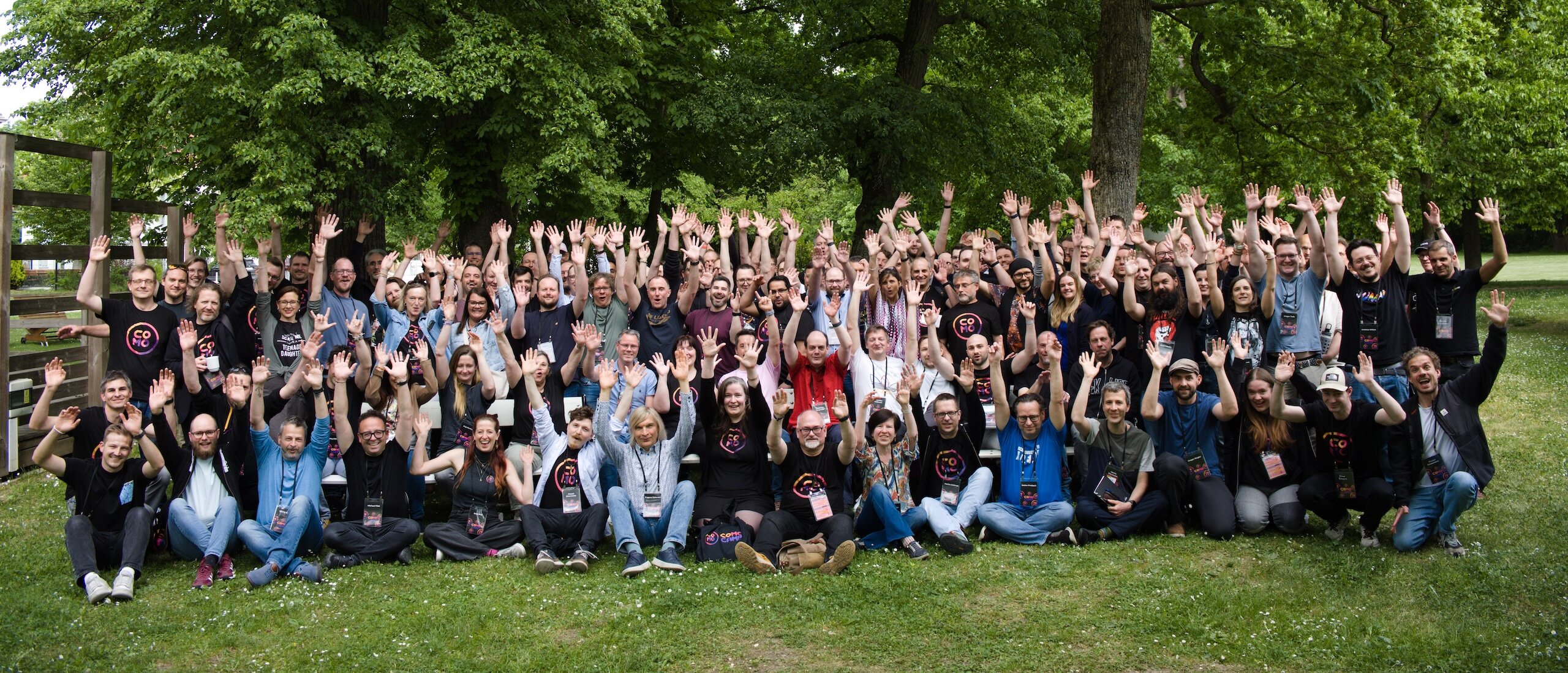
Last week, I was in Vienna, where I attended ComoCamp again this year. At this unique open space, practitioners of collaborative modelling methods come together. Once again, I experienced an event marked by encounters on equal terms and shared learning.
Tuesday: Community Dinner
For me, ComoCamp began on the evening before the first official day: Tobias Brennecke had organised a pre-conference community dinner. Over delicious Japanese food, the first great conversations developed, old acquaintances met again, and new faces joined in.
Many thanks to Tobias for organising it!
Wednesday: Workshops
The first official ComoCamp day is traditionally a workshop day. On this Wednesday, I attended two workshops.
The workshop “Architectural Roleplay” by Stefan Priebsch was about a collaborative modelling approach in which the participants explore a domain by taking on roles in a concrete scenario. Instead of describing the system only from the outside, we slipped into the interactions that shape it: Who acts? Who decides? What information is needed? Where do handovers take place? And which constraints influence the flow?
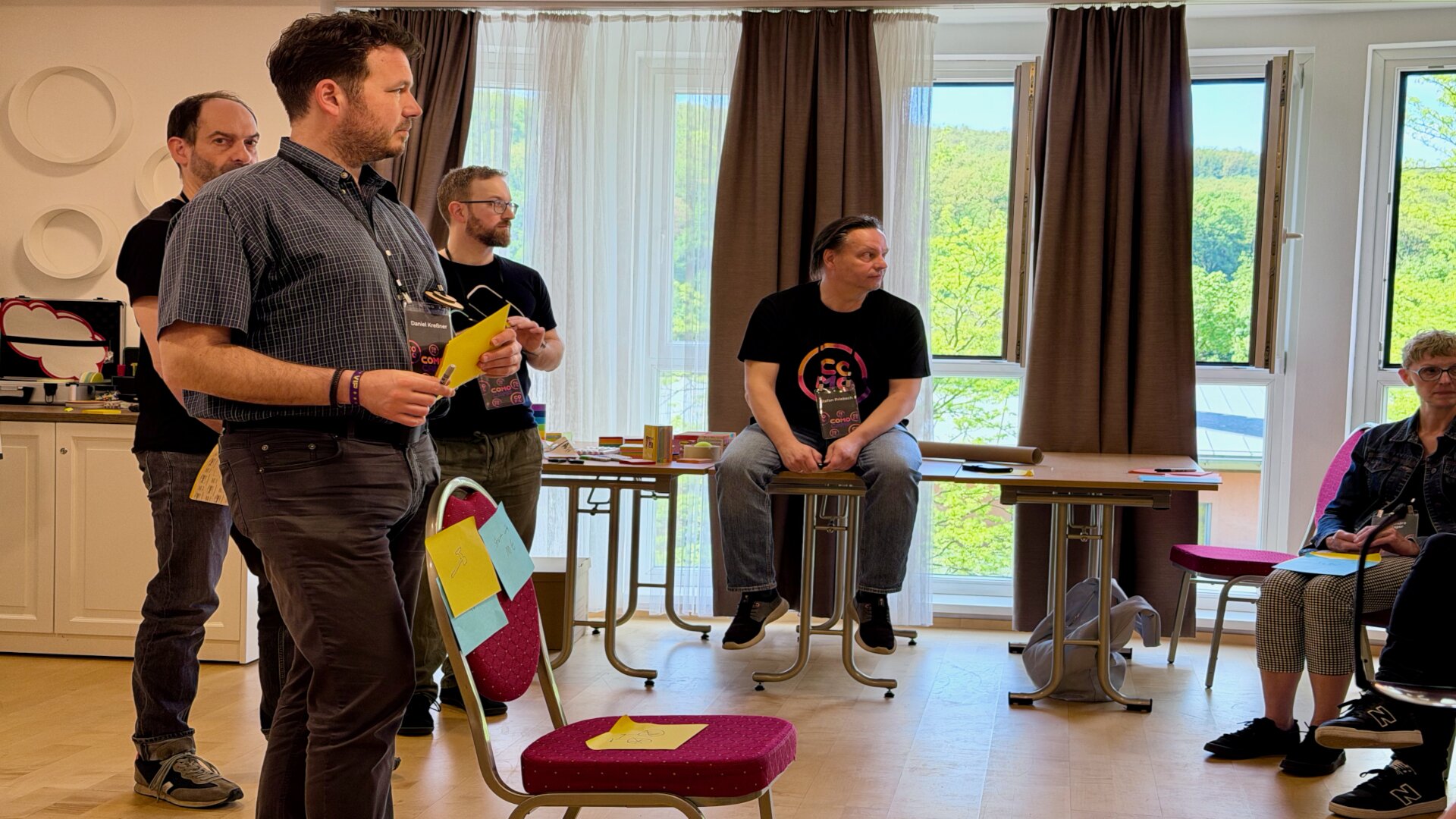
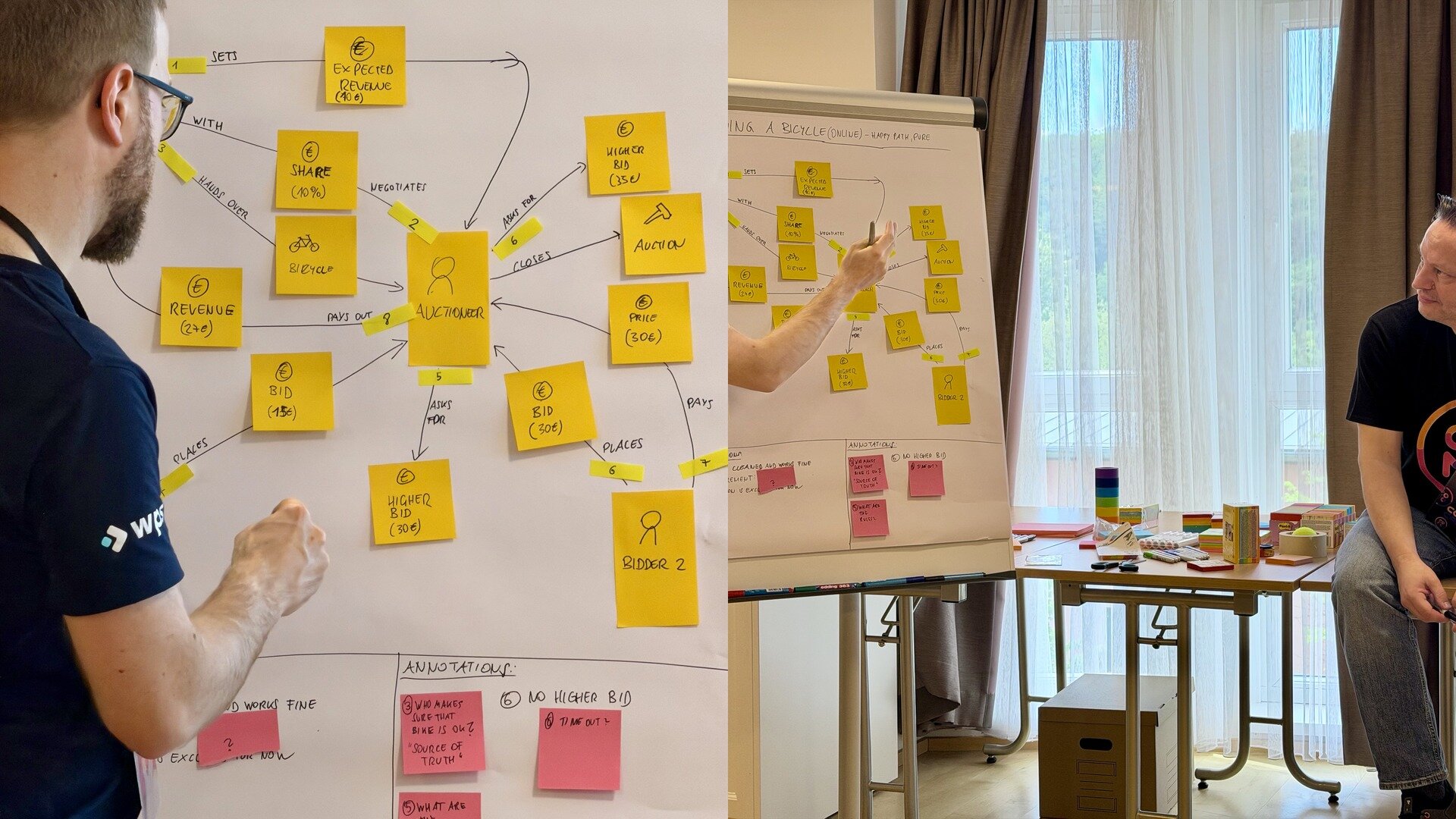
Stefan was spontaneously supported by three additional facilitators: Tobias Goeschel documented the results of the role play in Event Storming notation, Stefan Hofer in Domain Storytelling notation, and Bastian Waidelich in free form. In this way, we developed and documented a shared understanding of the process.
The second workshop I attended was “System Overboard! The Whodunit of Software Design” by Jacqui Read. Jacqui had prepared a game in the style of a murder mystery: One half of the group took on the role of consultants, while the other half played domain experts on board a cruise ship. The domain experts received booklets with background information on their roles and their secrets, as well as a shared script that was used several times throughout the workshop to drive the story forward. A truly impressive experience!
Thursday: Open Space
On Thursday and Friday, the open space took place. On Thursday, I attended three sessions.
In “Modeling Technical Domains” by Gregor Hohpe, we discussed the questions of what distinguishes technical domains (development tools, platform engineering, ...) from business domains, when a technical domain becomes a business domain, and whether or how we model technical domains. I was in a group that explored these questions using PHPUnit (or, more abstractly, development tools) as an example.
A statement by Gregor still resonates with me:
Abstraction must be more than the sum of the components, it must give us a new language.
Nobody orders "Flour, Tomato, Mozzarella", they order "Pizza Margherita".
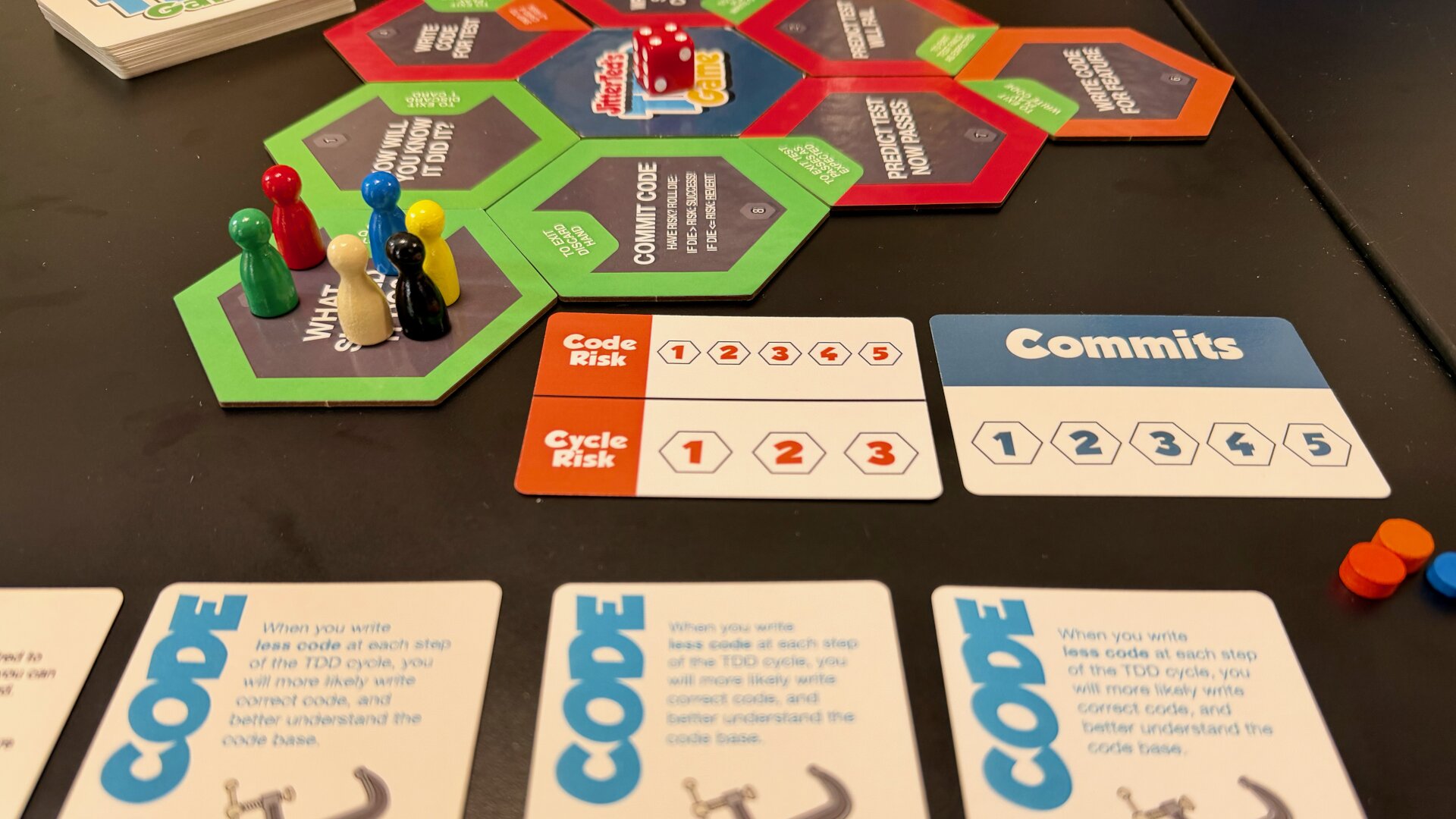
In a session led by Ted M. Young, we played the board game he developed, “JitterTed’s TDD Game”, the goal of which is to commit as much error-free code as possible. Based on Predictive Test-Driven Development, we decide whether to take risks and skip tests, or to play it safe and write less code along the way. I played the game for the first time, and it was a lot of fun.
In the session “Executable Event Model”, Martin Lorenz presented Reventless: a type-safe CQRS framework based on Event Sourcing for serverless applications, which aims to make Event Sourcing accessible and AI-friendly.
Friday: Open Space
On Friday, too, I attended three open space sessions.
In “Craft Still Matters”, Gregor Riegler presented the ideas from his article The Complexity Wall as a talk. We developers have always been keen to keep code small and understandable. We have the luxury of complaining when we do not understand code. Coding agents do not have this luxury. When we hit the “complexity wall”, discipline and craft help us. An agent, on the other hand, wants to deliver the “most normal” solution, not necessarily a good one.
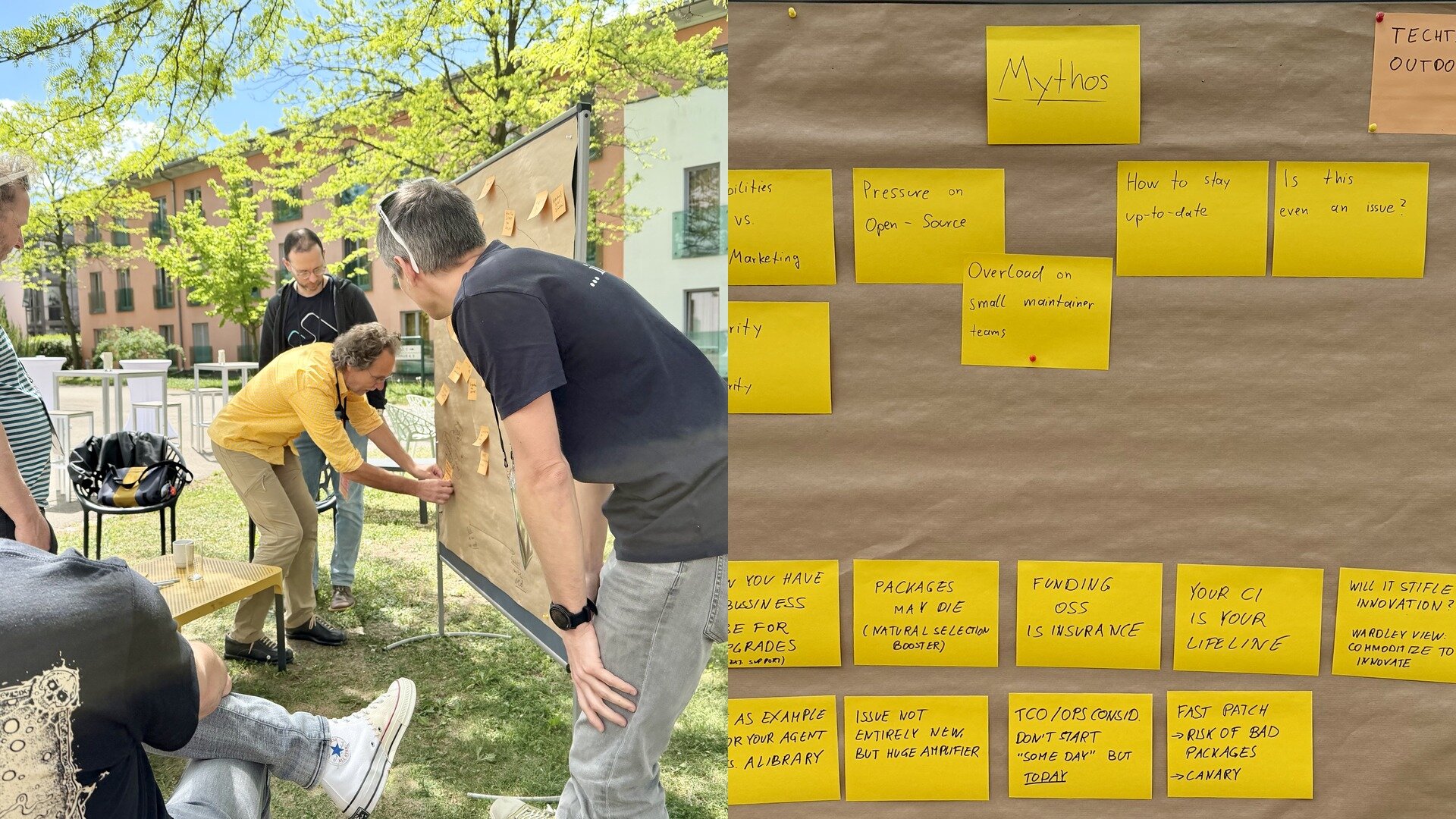
In the session on Claude mythology proposed by Paul Schmiedel, we discussed, amongst other things, with Gregor Hohpe the implications of AI coding agents, particularly those focused on security, for Open Source software: Suddenly there is a business case for regular upgrades. Some Open Source projects could die: security as a booster of natural selection. These are not new problems, but ones that are dramatically amplified by AI.
The last session I attended on Friday was “Should we really kill the aggregate?” by Martin Lorenz, inspired by Sara Pellegrini's article series. In particular, we discussed the concept of the Dynamic Consistency Boundary, which shifts complexity from the application into the event store. A highlight: Sara Pellegrini herself took part in the discussion.
Thank you!
What makes ComoCamp so valuable to me is the extraordinary community. I have only ever experienced this inclusive atmosphere, in which knowledge is exchanged without hierarchy, at ComoCamp and SoCraTes.
I would like to express my sincere thanks to Stefan Priebsch, Henning Schwentner, Martin Schimak and Daniel Sack, as well as their “helping hands” who volunteer their time to organise this event. Their commitment enables all of us to grow in this inspiring environment and to shape the future of collaborative modelling together.
Until next time!