Training · Orientation
Where Are Your Tests?
Why nobody gets by without automated tests any more
- Scope 1 session of 1 hour
- Format Live via Zoom
- Language German
- Price per person free of charge
What it is about
Where are your tests? If you do not have a good answer to that question, you are not alone. Many teams still check their software by hand: click through it once before the release, and whatever slips through gets fixed afterwards. That has always been risky, and today it is no longer sustainable.
In minutes, coding agents generate code that would take a human hours. Whoever wants to check that code by hand becomes the bottleneck or skips the check. Automated tests keep up with this pace:
- Safety net. A test reports immediately when a change breaks something, whether a human or an agent made it.
- Executable specification. A test records what your software is supposed to do.
- Feedback for agents. A coding agent needs feedback on whether its code works, and a test provides it.
You no longer have to write all your tests by hand. You do have to understand and assess them yourself. In this hour you see what that means and where to start. The examples are in PHP with PHPUnit; what they show applies to every programming language.
How the hour works
The hour is a talk with a live demonstration, followed by time for your questions and for discussion. You do not program along. A poll at the beginning asks how you check your software today, and the answers carry the session. If you do not test today, you usually have reasons for it, and they are discussed too.
The demonstration uses a small shopping cart without tests to show in PHP with PHPUnit what is the same in every language. For the most important terms you learn what the corresponding tool is called in other languages. The hour ends with a first step you can take without any further training.
Programme
-
Session 1: Where are your tests?
How do you know that your last change did not break anything?
- How you check today: clicking through, test protocols, hope, and what of this is repeatable and what is not
- What missing tests cost: bugs that your customers find, changes and refactorings that get put off because nobody knows what they would break, and knowledge that lives in individual heads
- Live, from clicking through to a test: you already do this, only by hand. The
var_dump()and the expectation in your head become a PHPUnit test that finds the bug clicking through missed - Tests in the age of agents: live, a coding agent writes tests that are green. The code is broken on purpose, and one of the tests stays green
- Your first step: starting the next bug fix with a failing test, or testing the code that will be changed next, and where to go from there
Result: A reason why your project needs automated tests, and a first step for your project that you write down before the hour is over
Who it is for
- Developers and teams who do not test automatically yet, in PHP or any other programming language
- Tech leads and team leads who decide whether and how their team starts with tests
- Everyone who has coding agents generate code and wonders how to trust it
Prerequisites
- None: you need neither prior knowledge of testing nor a development environment
What you take away
- You know which risks your project carries without automated tests
- You can explain what an automated test checks and what it does not
- You have arguments for the conversation with your team or your management
- You know your first step and the way after it
Your trainer
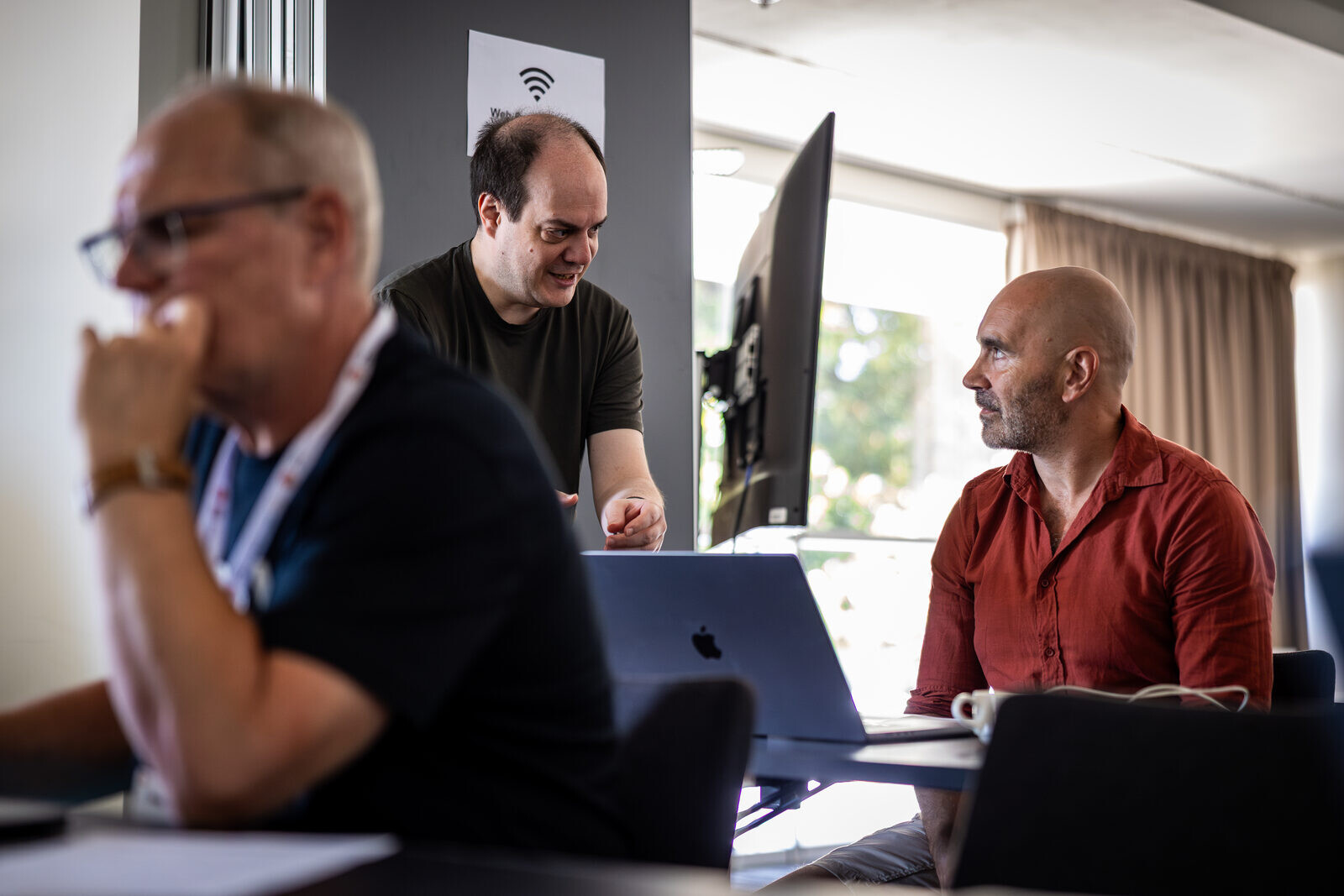
Sebastian Bergmann is the creator of PHPUnit, the de facto standard for testing PHP code. Since 2001 he has been helping teams build maintainable and well-tested software as a consultant and trainer, since 2009 as a co-founder of thePHP.cc.